Bullion vs Numismatic: Where Should You Put Your Money?
Any metal can be viewed from the point of view of investing, but in the case of numismatics, some people want to combine collectivization and profit.
But it is important to understand the difference between investing in metal in the face of a coin and in the coin itself, but before that, it is advisable to navigate the market with and without coin identification.
What is Bullion?
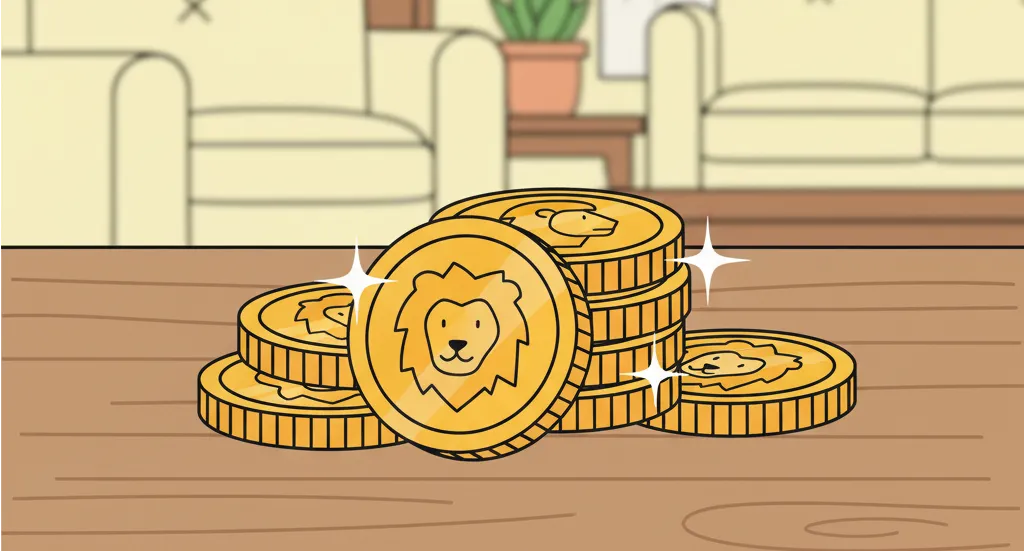
The word Bullion means an ingot or the precious metal in bars or coins.
The main idea of this type of investment is very simple, meaning you buy the actual physical metal.
You do not care which year the coin was made, not worrying about how many small scratches the coin has, if the damage is minor, and you do not care about the coin factory’s past.
The only thing you care about is the purity and the weight, making the price easy to check.
How Does the Bullion Price Work?
Imagine going to the market to buy apples, not caring about the shape of the apple, but only needing exactly one kilogram of fruit. The Bullion price comes from a simple formula:
Price = Spot Price (Market Price) + Premium (Extra Cost)
Spot Price: This is the current price of the metal on the global market, changing every second on big trading places, for example, gold costs $2000 for one ounce.
Premium: This is the small extra cost the seller adds, helping them pay for making the coin, shipping it safely, paying for their shop, and earning money for their life. This cost is usually 3-5% for gold and 15-20% for silver.
Examples of Bullion:
Bars: Simple, heavy blocks of metal.
Top-Selling Coins: The "American Eagle" from the USA, the "Maple Leaf" from Canada, the "Vienna Philharmonic" from Austria, and the "St. George the Victorious" from Russia.
Good Parts
You do not need a smart person to tell you the price of your coin, only needing to open the gold price chart on the internet, multiplying the price by the coin’s weight, and then you know your money's value.
Liquidity means how quickly you can turn your item into cash, finding a buyer for a "Maple Leaf" in any pawn shop, bank, or coin store everywhere, from New York to Hong Kong, making it a world-wide accepted form of money.
You do not need to study the long history of kings or learn about different ways coins are made, only needing money to buy the metal.
Bad Parts
If the gold price drops, your money drops too, with the coin’s beauty not helping its value stay high.
What is Numismatics?
Numismatics is investing not in the metal itself, but in history, how rare the coin is, and its condition. The metal in this case is just the background for a picture, like a canvas for a painting.
How Does the Numismatic Price Work?
The price here is very different and much harder to calculate:
Price = Rarity + Buyer Demand + Condition
The metal in a numismatic coin might be worth $500, but the coin itself could sell for $50,000, with this large difference between the metal price and the coin price called the "numismatic premium."
Examples of Numismatics:
Very old coins
Coins from ancient times
Coins made in rare years
Good Parts
Even if the gold price falls a lot on the market, a rare 18th-century coin might not lose any value, maybe even becoming more expensive, because collectors do not care about the market, only needing that specific coin for their set.
A normal gold bar will never become 100 times more expensive in 10 years, unless money loses all its value, but a rare coin can, especially if people suddenly want it or if a perfect one is found.
Moreover, you can check the condition and price via a coin identification app like Coin ID Scanner.
Bad Parts
Who decides if a scratch lowers the price by 10% or 50%? The difference in price between an "Almost Perfect" coin and a "Perfect" coin can be thousands of dollars.
Selling a rare coin quickly and for a high price is very hard, with a pawn shop only giving you the metal price. To sell it as a rare piece, you must find a collector or an auction, and this can take many months.
Semi-Numismatic
This is where new buyers lose the most money, with smart coin companies creating a mixed product.
They take a normal investment coin, like a silver ounce, drawing Harry Potter, Mickey Mouse, or a yearly symbol on it in color, putting it in a nice box, writing "Limited Edition," and selling it to you for three times the metal price.
Why this is dangerous: They tell you this is a "Collector's Item," but this fake rarity is not wanted in the second-hand market.
After 5 years, when the Harry Potter excitement is gone, you try to sell it, but Numismatic collectors do not care about it (it is not real history), and metal investors do not care about it (it is too expensive for one ounce). In the end, you bought silver but paid a gold price for it.
Advice: Do not buy modern "gift" coins with colored pictures or shiny stones if you want to invest, only buying them if you just want a nice object for your shelf.
Grading
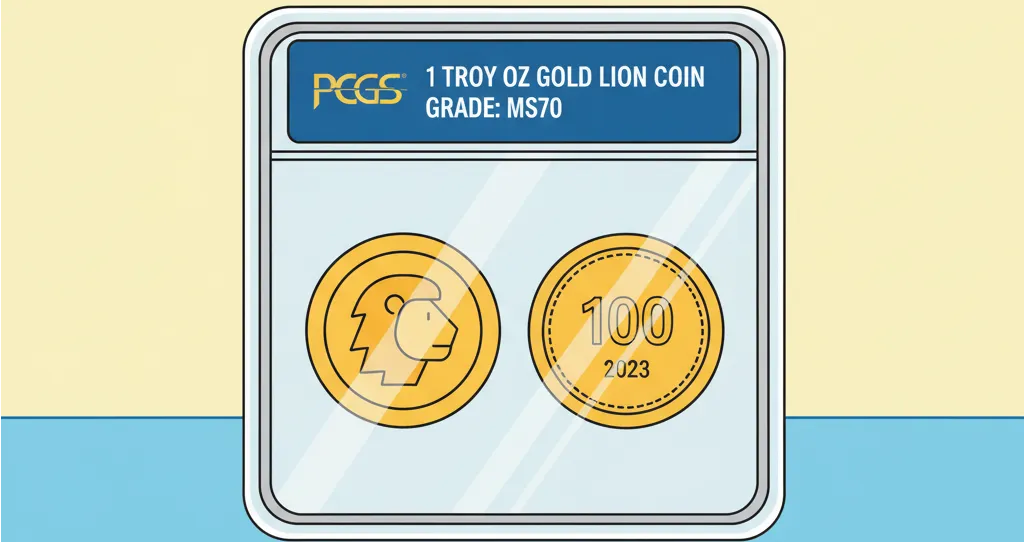
Because sellers often lie about the coin's condition, investors use independent grading companies like NGC and PCGS to check the coin.
You send your coin to the experts.
They check if the coin is real and give it a score from 1 to 70 based on its condition.
They seal the coin in a hard plastic holder with a unique number and code.
Never buy an expensive numismatic coin without a slab if you are not an expert buyer.
The slab is your guarantee that the coin is real and that its condition score is fair. Buying bullion in a slab does not make much sense (it is just an extra cost) unless the coin is in the perfect MS-70 condition.
Taxes and Rules
Bullion: In many places, investment gold is free from VAT (sales tax), showing the government sees it as money. But when you sell it, you might have to pay a tax on the money you earned (Capital Gains Tax) if you sold it for more than you bought it for.
Numismatics: This is often seen as a "collection item," like an antique. In some places, taxes on collection items are lower or not required after you own them for a certain time. But sometimes bringing old coins across borders means you must declare them as "cultural value," making it hard to take them out of the country later.
Always check your country's rules before buying the metal.
Advice to You
Buy a few silver ounces or a small gold coin, feeling the weight in your hand. Learn how buying and selling works, understanding how to watch the market price. This is the base of your money set, acting as your safe savings for bad times.
You should only start investing in numismatics when:
You already have a good amount of basic metal saved.
You start to feel bored.
You are ready to spend many hours reading books and studying auctions.
Remember this simple idea: Bullion is money. Numismatics is like a lottery ticket that costs a lot to buy.
A good money set for an experienced metal investor often looks like this:
80-90% — Investment coins and bars
10-20% — Rare, good-quality numismatics
Do not mix up investing with collecting, and your money will be safe, no matter if it is shiny or covered with the dust of age.