Abraham Lincoln: The First Real Person on an American Coin
Before 1909, American coins used for daily shopping never showed real people, being a result of a deep belief held by the US founding fathers thinking that putting portraits of leaders or heroes on money showed signs of a monarchy.
However, during the start of the twentieth century, this long tradition suffered a break, making the appearance of Abraham Lincoln on the Lincoln Wheat Penny coin a revolutionary event changing the look of American money forever.

Tradition Against Monarchy
During the first decades of the United States' existence, the question of money design stayed political, seeing George Washington, the country’s first president, strongly refusing the offer to put his portrait on coins.
He believed such a practice belonged to European kings, staying unfit for a democratic republic, leading to coins showing an imaginary figure of Liberty in different forms instead of presidents' portraits.
By 1909, the situation changed, with the country preparing to celebrate the 100th birthday of Abraham Lincoln.
At that time, Lincoln's figure gained the status of a nearly religious symbol of national unity and freedom, making the idea of putting his image on a coin gain support at the highest government level.
The Role of Theodore Roosevelt
President Theodore Roosevelt played a deciding role in changing American coin making, believing current US coins looked boring and ugly compared to ancient Greek and Roman samples.
He wanted to create a "golden age" for American coin art, seeking a more beautiful design for the nation's currency.
Roosevelt personally chose artist Victor David Brenner to create the design for the new cent, seeing a memorial medal with Lincoln’s profile created by Brenner earlier pleasing the president greatly. Roosevelt's decision stayed bold, going against the long practice of using Liberty, but Roosevelt’s power and the people's love for Lincoln allowed him to overcome the resistance of conservative leaders.
Reasons for Choosing Abraham Lincoln
Choosing Lincoln as the first real person on a coin happened for several reasons, making his candidacy perfect for this historical step.
Lincoln counted as the "Great Emancipator" keeping the country together during the Civil War.
His life starting in a poor family and reaching the top of power showed the "American dream" understood by every citizen.
The 100-year birthday since his birth (1809–1909) offered an official and grand reason for changing the design.
A need existed to update the one-cent coin, seeing the "Indian Head" design remaining unchanged since 1859.
The government wished to strengthen national identity using images of great historical people.
Technical Changes and Brenner's Design
Victor David Brenner created Lincoln's portrait based on a Matthew Brady photo taken in 1864, with the artist wanting to show the president's seriousness, kindness, and tiredness.
On the back side of the coin, two wheat ears appeared, symbolizing the prosperity and plenty found in the American land — the main detail that can be easily determined with a coin identifier app.
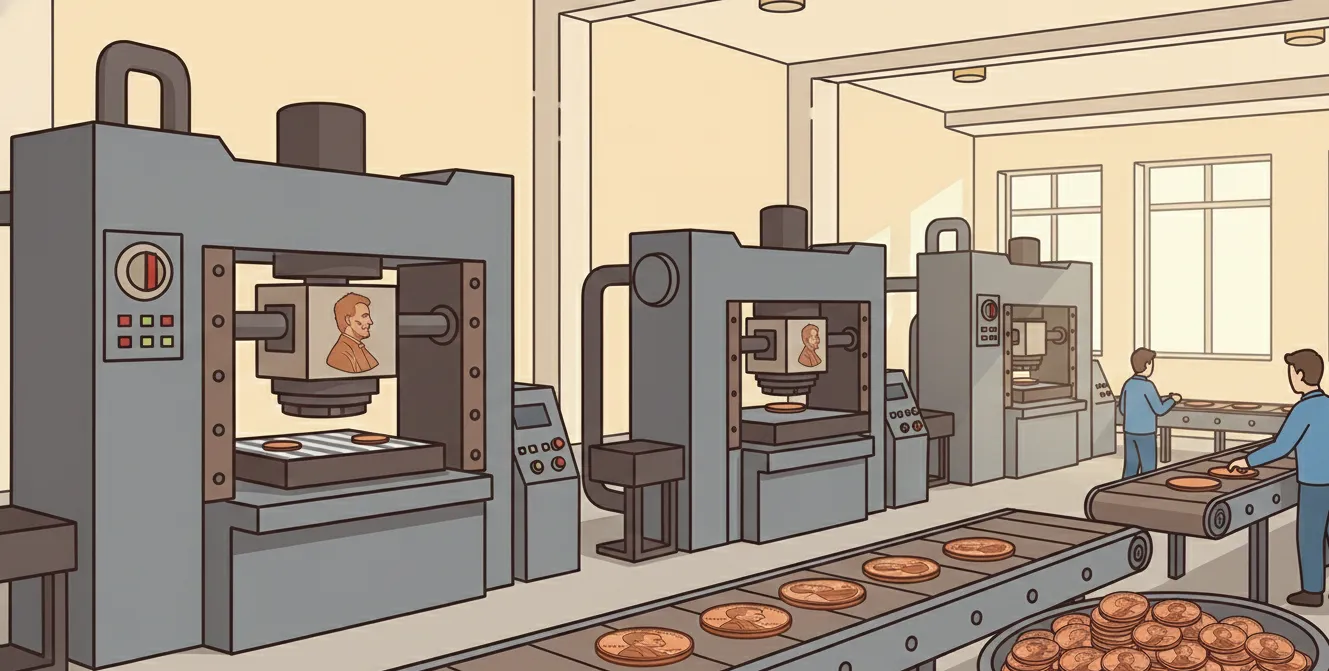
The coin became smaller and thinner compared to early cent versions made in the nineteenth century, allowing for metal savings and making the coin easier to use in mass trade machines starting to appear at that time.
Comparison Point | Indian Head Cent (until 1909) | Lincoln Cent (since 1909) |
Front Side | Figure of Liberty in an Indian headdress | Real portrait of Abraham Lincoln |
Back Side | Oak wreath and shield (since 1860) | Two wheat ears ("Wheat Reverse") |
Artist-Designer | James B. Longacre | Victor David Brenner |
Symbolism | Young American freedom | National unity and historical memory |
Current Status | Rare collectible coin | Longest-running series in US history |
Public Reaction and Success
When the Lincoln cent entered circulation in August 1909, it caused a massive excitement, seeing huge lines forming near Mint buildings in Philadelphia and New York.
Newspapers reported people changing silver coins for new cents just to hold the image of their loved president in their hands.
Despite the success, a scandal appeared because of the creator's initials (V.D.B.) on the back side, being discussed in other materials.
However, the fact of Lincoln staying on the coin gained great public joy, opening the way for later changes:
In 1932, George Washington appeared on the quarter
In 1948, Thomas Jefferson appeared on the 5-cent coin
In 1946, Franklin D. Roosevelt appeared on the dime
In 1948, Benjamin Franklin appeared on the half-dollar
But in case you want to check the coins in a few seconds without any preparation — do it with a free coin appraisal app.
Economic and Cultural Meaning
The Lincoln cent became the most produced coin in the world, seeing over 400 billion coins made over one hundred years, making Lincoln’s image the most recognized portrait in human history.
The cultural meaning of the coin stays hard to overstate, making coin collecting a popular hobby among regular Americans. Children started collecting cents by years and mint marks in special albums, hoping to find rare samples like the 1909-S VDB or 1914-D. The Lincoln cent became a symbol showing that the country's history belongs to every person, even having only one small coin in their pocket.
Why the Design Stays Unchanged for 100 Years
Lincoln’s portrait remains on the front side of the coin for over 115 years, setting a record for American coin making. Several tries to change the design happened, but the public and politicians always stood against it.
Brenner’s portrait counts as one of the best examples of medal art.
Lincoln remains a figure bringing people of different political views together.
The population’s habit of seeing the recognized image makes using the coin easy.
The cost of changing tools and design for the cheapest coin counts as economically useless.
Lincoln as a Symbol of Stability
During times of crisis and war, Lincoln’s image on the coin served as a reminder that the country had already passed through hard times.
During World War II, when copper was needed for the front, the 1943 cent was made from steel with a zinc cover, seeing the Lincoln portrait staying the same and symbolizing the strength of the American spirit.
In 1959, celebrating the 150th birthday of the president, the back side design changed, seeing the Lincoln Memorial appearing instead of wheat ears, highlighting the move from farming symbols to a national architectural monument.